Last updated: September 2026. Editorial Team — researched using official Federal Reserve speech transcripts and reporting from CNBC and the Associated Press. See “Sources & Methodology” for our full source list.
Quick Answer
Weeks before the Fed’s actual September rate hike, Fed Governor Christopher Waller publicly signaled he was leaning toward holding rates steady, directly contrasting with Chair Kevin Warsh’s more hawkish framing delivered just days earlier at the Fed’s Jackson Hole symposium. Waller’s September 3 remarks, made ahead of the August inflation data release, initially cut rate-hike odds by roughly 15 percentage points, from around 63% to 48.4%, before the eventual data and the Fed’s own decision ultimately sided with the more hawkish view Warsh had articulated.
What Waller Actually Said, and Why It Mattered
Waller’s September 3 remarks framed his position around a specific conditional test: if the upcoming August inflation report showed continued disinflation, he would support holding rates steady, describing his willingness to “wait one more meeting.” He acknowledged inflation remained meaningfully above the Fed’s 2% target, but pointed to a specific technical explanation for part of that elevation, arguing certain “nonmarket services prices,” which are statistically estimated rather than directly observed, could be pushing headline inflation figures higher than underlying trends actually justified.
Photo by Trev W. Adams via Pexels
The Direct Contrast With Warsh’s Jackson Hole Framing
Waller’s more patient framing stood in genuine tension with Chair Warsh’s own remarks delivered less than a week earlier at the Fed’s annual Jackson Hole symposium, where Warsh had characterized recent softer monthly inflation readings as not indicating underlying trends had meaningfully improved, adding that if progress didn’t continue, the Fed still had “work to do.” That’s a meaningfully different read of essentially the same underlying inflation data: Waller interpreting recent readings as encouraging enough to justify patience, Warsh interpreting the same broad data as insufficient evidence that the disinflation trend was genuinely durable.
Why a Governor Publicly Diverging From the Chair Is Genuinely Notable
Public disagreement between a sitting Fed governor and the chair, expressed openly before an actual policy decision, represents a meaningfully more transparent form of internal Fed debate than typically becomes visible to markets in real time. Waller has a long history as an outspoken member of the Fed’s governing board, and his willingness to stake out a clearly different position from Warsh’s own Jackson Hole framing gave markets genuine insight into the range of views actually being debated internally, rather than only seeing a unified public position after the Committee had already reached consensus.
The Immediate Market Reaction to Waller’s Comments
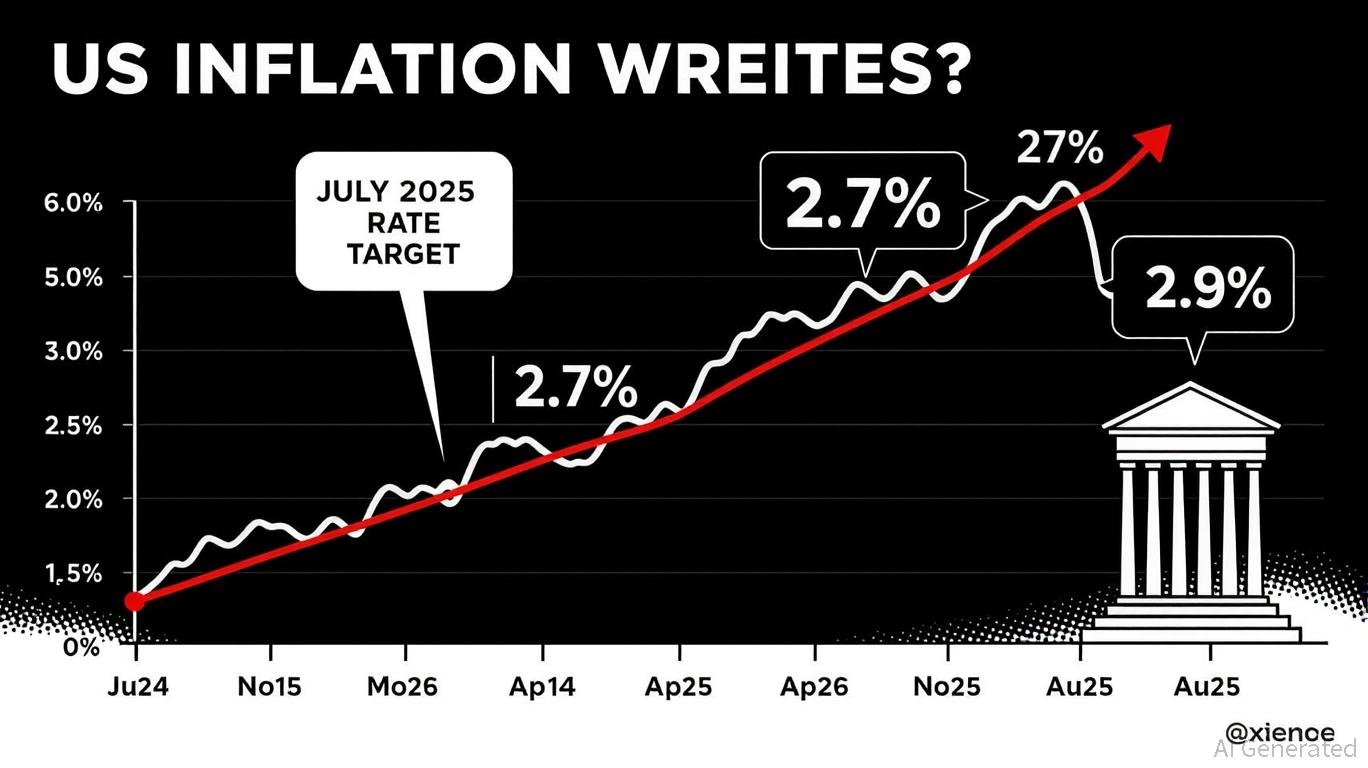
Financial markets reacted quickly and substantially to Waller’s September 3 remarks: the probability of a quarter-point rate increase at the September meeting fell to roughly 48.4%, down about 15 percentage points from the previous day’s pricing. That’s a genuinely large single-day shift in market-implied rate-hike probability, illustrating how much weight markets placed on a single Fed governor’s public comments, even absent any new economic data release accompanying his remarks.
What Ultimately Determined the Outcome
Waller’s own framework was explicitly conditional: he stated that if the upcoming inflation report showed disinflation progress had reversed, “it’s time to pull the trigger and hike rates.” The subsequent August inflation data, combined with the broader accumulation of oil-price-driven inflation pressure and the labor market resilience discussed in our companion coverage this month, ultimately supported the more hawkish case Warsh had articulated at Jackson Hole, with the Fed’s actual September decision landing on a 25 basis point hike in a unanimous vote that included Waller himself.
Photo by energepic.com via Pexels
Why Waller’s Ultimate Unanimous Vote Still Matters
It’s genuinely notable that despite his publicly stated preference for patience just two weeks before the decision, Waller ultimately joined the unanimous 12-0 vote in favor of the hike. That outcome suggests the intervening inflation data proved compelling enough to shift even a governor who had explicitly signaled a preference for holding steady, reinforcing that Warsh’s more hawkish read of underlying inflation trends held up better against the actual incoming data than Waller’s more optimistic disinflation framing.
What This Internal Debate Reveals About the Current Fed
- Genuine, substantive policy disagreement exists within the current Fed, not just political tension with the White House: Waller’s public divergence from Warsh illustrates real analytical disagreement about how to interpret the same underlying inflation data, separate from the administration-Fed tension discussed elsewhere in our coverage.
- Individual Fed governor commentary can move markets substantially, even between scheduled meetings: The 15-percentage-point swing in rate-hike odds following Waller’s remarks alone demonstrates how closely markets track every individual Fed official’s public statements.
- Watch for continued internal debate as future data arrives: With genuine, publicly visible disagreement over how to weight various inflation signals, future data releases are likely to continue producing similarly visible debate among individual Fed officials.
Frequently Asked Questions
Did Fed Governor Waller support the September rate hike?
Ultimately yes. Despite publicly favoring a hold just two weeks earlier, Waller joined the unanimous 12-0 vote for the 25 basis point hike once subsequent inflation data proved less encouraging than his conditional framework required.
Why did rate-hike odds fall after Waller’s September 3 comments?
Waller signaled he would support holding rates steady if inflation data continued showing disinflation, causing markets to cut the probability of a hike from roughly 63% to 48.4% in a single day.
How did Waller’s view differ from Chair Warsh’s?
Warsh’s Jackson Hole remarks characterized recent inflation readings as not showing meaningful underlying improvement, while Waller argued certain estimated price components might be overstating true inflation, justifying a more patient approach.
What specific inflation component did Waller question?
Waller pointed to “nonmarket services prices,” which are statistically estimated rather than directly observed, as potentially pushing headline inflation figures higher than genuine underlying trends warranted.
Sources & Methodology
This article draws on: Federal Reserve Governor Christopher Waller’s official September 3, 2026 speech, “The Economic Outlook and Some Comments on My Policy Communication,” published by the Federal Reserve Board; CNBC’s coverage of Waller’s remarks and their market impact; the Associated Press’s coverage of Waller’s comments; and Fed Chirp’s comparative analysis of Fed speech hawkish/dovish scoring. Figures reflect market pricing and statements as of this article’s last-updated date.
This article is for informational purposes and does not constitute financial or investment advice.