In the quiet corridors of global finance and the bustling halls of industrial giants, a single piece of legislation—the Inflation Reduction Act (IRA) of 2022—has triggered a seismic shift. Far more than its name suggests, the IRA is not merely an American domestic policy; it is the opening salvo in a new kind of global conflict: a green subsidy arms race. This is not a war fought with bullets and bombs, but with tax credits, production incentives, and strategic capital, all aimed at dominating the defining industries of the 21st century.
The act, with its staggering $369 billion in climate and energy provisions, represents the most significant climate investment in U.S. history. But its ambition is even greater. It is a deliberate, powerful industrial policy designed to onshore critical supply chains, catalyze a domestic clean energy manufacturing boom, and challenge the long-standing dominance of other nations, particularly China, in green technologies.
This article will delve into the mechanics of the IRA, exploring how its “carrot-based” approach is fundamentally reshaping American industry. We will trace the flood of capital into new and expanded facilities across the nation, analyze the strategic geopolitical calculus behind the policy, and examine the fierce reactions it has provoked from allies and competitors alike. Finally, we will assess the long-term implications for global trade, climate goals, and the very nature of international economic competition. The green subsidy arms race is underway, and its outcomes will determine the economic and environmental landscape for decades to come.
Part 1: Deconstructing the Inflation Reduction Act – More Than Just a Climate Bill
To understand the global shockwaves, one must first appreciate the architecture of the IRA. It is a complex piece of legislation, but its power lies in a few key, strategically designed mechanisms that make investing in the U.S. clean energy sector overwhelmingly attractive.
1.1 The Core Incentives: Carrots, Not Sticks
Unlike previous climate efforts that relied on carbon pricing or mandates, the IRA is built on a foundation of generous, long-term tax credits and subsidies. The two most pivotal are:
- Production Tax Credits (PTCs): For renewable energy generators like wind, solar, and geothermal, the PTC provides a credit for every kilowatt-hour of electricity produced. The IRA made these credits “technology-neutral,” ensuring they adapt to future innovations, and crucially, extended them for a full decade, providing unprecedented market certainty.
- Investment Tax Credits (ITCs): For manufacturers and homeowners, the ITC provides a credit based on the amount invested in qualifying energy projects, including solar panels, battery storage, and advanced manufacturing facilities.
What makes these credits revolutionary are the bonus adders. Projects can significantly increase their credit value by meeting domestic content requirements (using U.S.-made steel and iron), being located in “energy communities” (former fossil fuel areas), or serving low-income communities. This creates a powerful incentive to not just build clean energy, but to build the industrial ecosystem that supports it within the United States.
1.2 The Battery and Critical Minerals Engine
Perhaps the most targeted aspect of the IRA is its focus on the battery supply chain—the heart of the electric vehicle (EV) and energy storage revolutions. The act contains two key provisions:
- Advanced Manufacturing Production Credit (45X): This provides a direct credit for every component manufactured in the U.S. for the clean energy sector. This includes credits for every kilogram of battery anode and cathode material, every watt of battery cells and modules, and for solar components like polysilicon and wind turbine parts. This has directly triggered a boom in plans for “gigafactories” across the country.
- Clean Vehicle Tax Credit ($7,500): To qualify for the full consumer EV tax credit, vehicles must meet strict sourcing requirements for critical minerals (a percentage must be extracted or processed in the U.S. or a free-trade agreement partner) and battery component manufacturing (a percentage must be made or assembled in North America). These percentages ramp up over time, creating a ticking clock for automakers to localize their supply chains.
This two-pronged approach attacks the problem from both ends: it subsidizes the factory making the battery parts (45X) and simultaneously creates demand for those parts by mandating their use in consumer vehicles.
1.3 The “Made in America” Mandate
Woven throughout the IRA is a strong thread of industrial nationalism. The domestic content requirements are not subtle suggestions; they are strict rules designed to break dependence on foreign supply chains, particularly those controlled by a “Foreign Entity of Concern” (FEOC)—a term clearly aimed at China, Russia, North Korea, and Iran. By tying the most lucrative subsidies to U.S. manufacturing and assembly, the legislation forces a massive, rapid reallocation of global investment.
Part 2: The American Reshoring Boom – Evidence on the Ground
The theoretical power of the IRA has been met with an overwhelming response from the private sector. The data and announcements since its passage in August 2022 paint a picture of an industrial renaissance.
2.1 The Numbers Tell the Story
According to analyses from organizations like the American Clean Power Association and Rhodium Group, the IRA has catalyzed a historic wave of investment:
- Over $300 billion in new private sector investments have been announced in clean energy and electric vehicle manufacturing.
- Over 100,000 new clean energy jobs have been announced.
- Planned domestic battery manufacturing capacity has increased sufficiently to support the production of 10-13 million electric vehicles annually by 2030—far exceeding projected U.S. sales.
2.2 The Battery Belt Rises
A new “Battery Belt” is emerging across the American South and Midwest, stretching from Michigan to Georgia. States like Georgia, South Carolina, and Tennessee have become magnets for massive projects:
- Hyundai and SK On are building a $5 billion EV and battery plant in Georgia.
- Envision AESC is investing $2 billion in a South Carolina battery cell gigafactory.
- Ford’s massive “Blue Oval City” in Tennessee, a $5.6 billion campus, is being constructed in partnership with SK On.
These are not just final assembly plants. The investments are flowing upstream into the most critical and value-added parts of the chain: cathode and anode production, lithium processing, and graphite purification—sectors once almost entirely dominated by China.
2.3 Revitalizing Traditional Industrial Bases
The IRA is deliberately designed to include communities tied to the fossil fuel economy. The “energy community” bonus credit is driving investment into areas like the Rust Belt and Appalachia.
- Steel: Companies like Cleveland-Cliffs are investing in upgrading facilities to produce electrical steel for EVs and transformers, leveraging both the credits and the demand for domestically sourced materials.
- Hydrogen: The $3/kg credit for clean hydrogen (produced with minimal emissions) is making previously uneconomical projects viable, with major hubs planned in Texas and the Gulf Coast, often leveraging existing oil and gas infrastructure and expertise.
- Solar: After years of decline, U.S. solar manufacturing is seeing a resurgence. Companies like Hanwha Qcells are making multi-billion-dollar investments to build a fully integrated solar supply chain in Georgia, from raw polysilicon to finished panels.
Part 3: The Global Ripple Effect – Allies and Adversaries Respond
The sheer scale and targeted nature of the IRA have not gone unnoticed on the world stage. The U.S. policy has effectively pulled up the drawbridge for certain industries, forcing other nations to respond or risk being left behind.
3.1 The European Union: From Outrage to Emulation
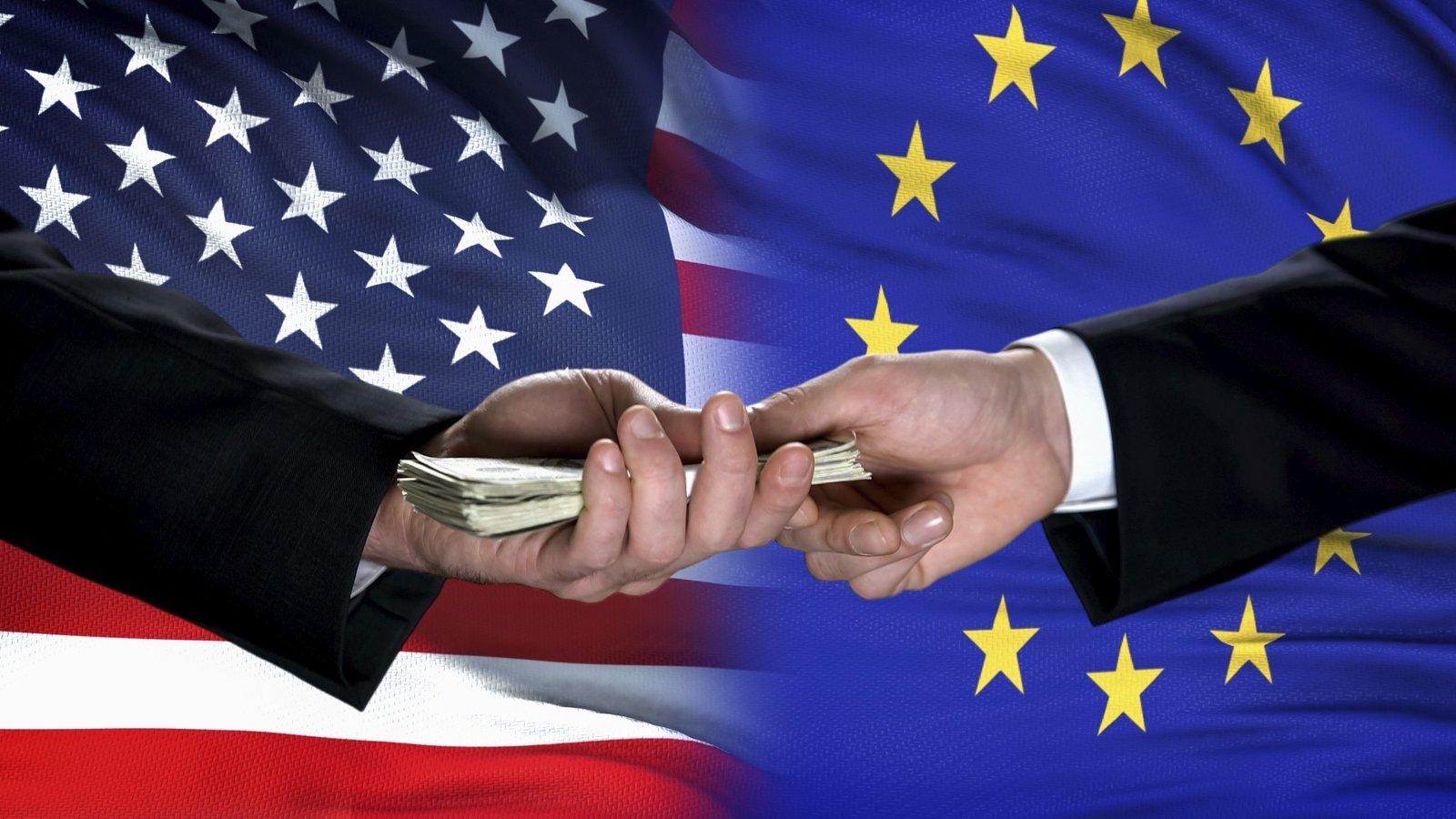
Initially, the European Union reacted with alarm and anger. European leaders, notably French President Emmanuel Macron, accused the U.S. of “super-aggressive” subsidies that threatened to suck investment out of Europe, a phenomenon they dubbed “de-industrialization.”
Their core complaint was that the IRA’s “Made in America” requirements violated World Trade Organization (WTO) rules on discrimination and threatened to create a “Fortress America” for green tech. However, after initial threats of a trade war, the EU pivoted.
Recognizing they could not out-lobby the U.S. to change the IRA, they decided to join the race. The EU responded with its own Green Deal Industrial Plan, which aims to:
- Simplify and fast-track permitting for clean tech projects.
- Relax state aid rules, allowing member states to match the subsidies offered by the U.S. and other countries.
- Boost funding through new European sovereignty funds and the repurposing of existing funds.
- Propose the Net-Zero Industry Act, setting a target for the EU to manufacture 40% of its clean tech needs domestically by 2030.
This response demonstrates the classic dynamics of an arms race: one side’s escalation prompts a matching or exceeding escalation from the other.
3.2 Asia-Pacific: A Mixed and Strategic Calculus
The reaction in Asia has been more nuanced, reflecting the region’s complex economic ties to both China and the U.S.
- South Korea and Japan: As key U.S. allies with major automotive and battery corporations (like Hyundai, LG, SK On, and Toyota), these countries have expressed concerns. Their companies have massive investments in China and had planned their global supply chains without anticipating the IRA’s strict FEOC rules. They are now scrambling to pivot investment to the U.S. and are lobbying their own governments for similar support. Both Japan and South Korea have since announced their own enhanced green investment strategies.
- China: The Primary Adversary: For China, the IRA is a direct and explicit challenge to its “Made in China 2025” strategy, which aimed for global dominance in advanced industries like EVs and batteries. China’s initial public response was dismissive, but its actions reveal deep concern. Beijing is doubling down on its own technological innovation, restricting exports of key minerals like gallium and germanium, and aggressively seeking new markets in Southeast Asia, the Middle East, and Africa to offset potential lost market share in the West. The IRA has cemented a “decoupling” or “de-risking” of the U.S. and Chinese clean tech ecosystems.
Part 4: The Geopolitical and Economic Implications
This subsidy arms race is more than an economic competition; it is reshaping global alliances, trade patterns, and the fight against climate change.
4.1 The Reshaping of Global Supply Chains
The era of hyper-globalized, cost-optimized, and China-centric supply chains for critical goods is ending. We are moving toward a more fragmented, regionalized, and politically aligned system. The U.S. is building a North American-centric supply chain, the EU is building a European-centric one, and China is consolidating its own sphere of influence. This “friend-shoring” or “near-shoring” increases resilience but also comes with higher costs and complexities.
4.2 A Boon for Climate Action, with a Caveat
On one hand, the massive public and private investment being unlocked by the IRA and its global counterparts is accelerating the clean energy transition at a pace unimaginable just five years ago. It is making technologies like green hydrogen and grid-scale storage economically viable.
On the other hand, the “local content” requirements create inefficiencies. They may divert investment from the most optimal global locations to politically favored domestic ones, potentially slowing the overall global rollout and increasing the cost of decarbonization in the short to medium term. The net effect on global emissions remains a subject of intense debate.
4.3 The Risk of Protectionism and Trade Conflict
The world is entering a new era of industrial policy, reminiscent of mercantilist periods. The risk is a downward spiral into tit-for-tat subsidies and trade barriers, which could fracture the global trading system and ignite inflation. The WTO, designed for an era of liberalization, is ill-equipped to manage this new reality, leaving disputes to be resolved through bilateral power struggles.
Read more: The Invisible Bank: How Embedded Finance is Reshaping American Retail
Part 5: Challenges and the Road Ahead
Despite the initial boom, the green subsidy arms race is fraught with challenges that will determine its ultimate success.
- Implementation and Bottlenecks: The sheer volume of projects is straining the system. Challenges include lengthy permitting processes, workforce shortages in skilled trades, and securing enough grid connections.
- The China Dependency: While the IRA aims to reduce reliance on China, the West remains deeply dependent on it for the processing of many critical minerals. Building alternative processing capacity will take years and significant investment.
- Fiscal Sustainability: Can the U.S. and EU sustain this level of subsidy in the long run? The IRA’s cost could exceed projections if adoption is high, and political winds can shift, threatening the stability that makes these investments attractive.
- Technological Neutrality vs. Picking Winners: By focusing on specific technologies like EVs and hydrogen, there is a risk of locking in today’s solutions and stifling more innovative, disruptive technologies that may emerge.
Conclusion: Navigating the New World Order
The Inflation Reduction Act has irrevocably changed the rules of the game. It has successfully jolted American industry into action, positioning the U.S. to be a leader, rather than a follower, in the clean energy revolution. It has also unleashed a global subsidy arms race that is redefining economic competition and geopolitical alignments.
The ultimate success of this strategy will not be measured solely by the number of gigafactories built in Georgia, but by whether it leads to a more secure, prosperous, and sustainable world. The path forward requires a delicate balance: fierce competition to drive innovation and build resilient supply chains, coupled with strategic cooperation with allies to avoid a destructive trade war and ensure that the global climate goals remain within reach. The green subsidy arms race is a high-stakes gamble, and the world is watching to see who will emerge victorious in the race to power the future.
Read more: Defi on Main Street: Is Decentralized Finance a Real Threat to Traditional U.S. Banking?
Frequently Asked Questions (FAQ)
Q1: Is the Inflation Reduction Act really just about inflation?
No, the name is somewhat misleading. While it contains provisions aimed at reducing the deficit and lowering prescription drug costs, its centerpiece and most impactful component is its $369 billion in climate and clean energy investments. Its primary goals are to accelerate the U.S. energy transition, boost domestic manufacturing, and enhance energy security.
Q2: How is the IRA different from previous U.S. climate efforts like the Green New Deal?
The Green New Deal was a non-binding congressional resolution outlining broad goals. The IRA is a concrete, enacted law with specific tax credits and subsidies. Furthermore, the IRA uses a “carrot” approach (incentives for industry), whereas the Green New Deal was often associated with a “stick” approach (regulation and mandates).
Q3: Are other countries’ complaints about the IRA being “protectionist” valid?
From a free-trade perspective, yes. The IRA’s domestic content requirements explicitly favor U.S. production over foreign, which can be seen as a violation of the principle of non-discrimination in international trade. However, the U.S. argues that the act is a necessary measure for national and energy security, aiming to reduce strategic dependencies, particularly on China.
Q4: As a consumer, how can I benefit from the IRA?
There are several direct benefits for consumers:
- Clean Vehicle Tax Credits: Up to $7,500 for new EVs and $4,000 for used EVs, provided you and the vehicle meet specific income and sourcing requirements.
- Home Energy Rebates: Credits for installing heat pumps, solar panels, energy-efficient windows, and upgrading electrical panels.
- Residential Clean Energy Credit: A 30% tax credit for the cost of solar, wind, geothermal, and battery storage installations at home.
Q5: What is a “Foreign Entity of Concern (FEOC)” and why does it matter?
The IRA defines FEOCs as entities owned by, controlled by, or subject to the jurisdiction of China, Russia, North Korea, and Iran. For EVs to qualify for tax credits, their batteries cannot contain any critical minerals or components sourced from an FEOC after 2024 and 2025, respectively. This is the core mechanism forcing automakers to decouple their supply chains from China.
Q6: Could this subsidy arms race backfire and harm the global economy?
Yes, there are significant risks. A proliferation of subsidies can lead to oversupply in some industries, wasted resources, and trade disputes that fragment the global economy. It can also divert government funds from other priorities like education or healthcare. The key is whether this competition spurs efficient innovation or devolves into wasteful protectionism.
Q7: Is the U.S. investment triggered by the IRA sustainable without permanent subsidies?
The strategy is to use temporary subsidies to achieve scale and drive down technology costs through innovation and learning-by-doing, a phenomenon seen with solar and wind power over the last decade. The goal is that within the 10-year lifespan of the credits, these industries will become self-sustaining and cost-competitive without need for further government support.