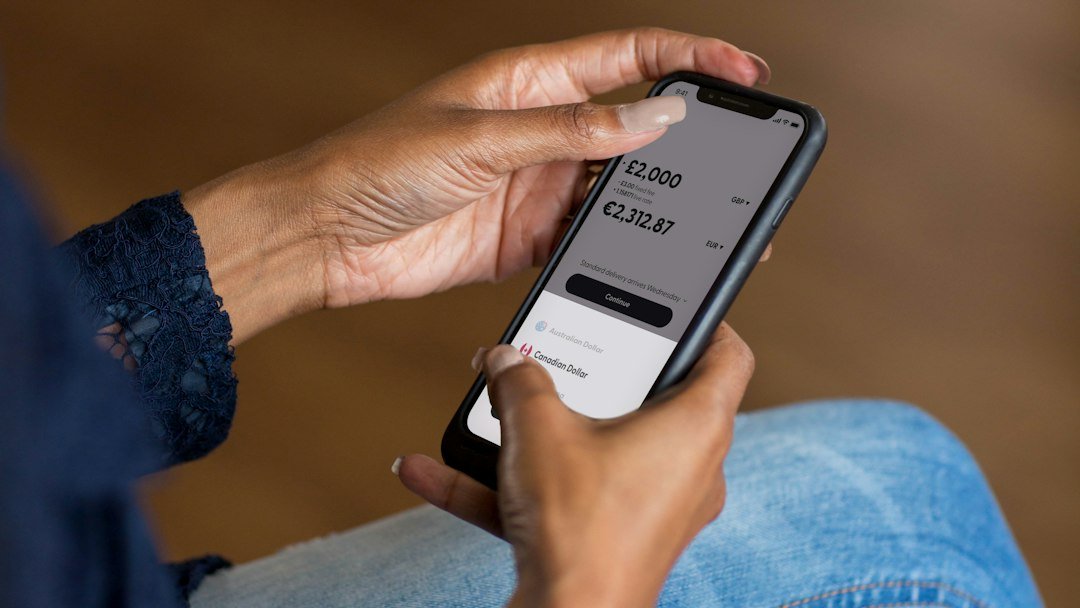
Your fintech app shows a balance, a debit card and maybe even a bank logo in the corner. It feels exactly like a bank account. But “feels like a bank” and “is protected like a bank” are two very different things, and in 2024 thousands of Americans learned the difference the hard way.
This guide explains how federal deposit insurance actually works, why money in some fintech apps is not automatically covered, what happened when the middleware company Synapse collapsed, and a short checklist you can run on your own accounts today.
What FDIC insurance really covers
FDIC insurance protects deposits at insured banks. The standard limit is $250,000 per depositor, per insured bank, per ownership category. If your insured bank fails, the FDIC steps in and returns your insured balance, usually quickly.
Notice the key phrase: insured bank. The insurance attaches to the bank, not to the app on your phone. It also covers deposits only, not stocks, bonds, mutual funds or crypto held at a brokerage or exchange.
It also does not protect you if a company other than the bank fails. That distinction is the heart of the fintech problem.
Why fintech apps are different
Many popular financial apps are not banks. They partner with a chartered bank that holds the actual deposits, a model often called banking as a service. Your app provides the interface, and the partner bank provides the license and the insurance.
In many cases, a middleware firm sits between the two, connecting the app to one or more banks and keeping track of who owns what. When that works, your money is held in a pooled custodial account at the bank, and “pass-through” insurance can treat each customer as if they had deposited directly.
The FDIC describes pass-through insurance this way: it recognizes the owners of deposited funds and insures their interests as if they had deposited directly at the bank, if certain conditions are met. When the conditions are met, each owner’s interest is insured separately up to $250,000 per ownership category. When they are not, the deposit is insured to the person named on the bank’s records and combined with that person’s other deposits at the same bank.
What happened with Synapse
According to the FDIC’s own proposal on custodial deposit accounts, Synapse Financial Technologies was a middleware provider that linked fintech companies with insured banks. The banks did not maintain the customer ledgers or the amount attributed to each customer.
The timeline, as the FDIC describes it:
- Synapse filed for bankruptcy in late April 2024.
- In early May 2024, one partner bank froze deposits after Synapse cut its access to a system used to track end users, deposits and transactions.
- A bankruptcy trustee was appointed on May 24, 2024, and the trustee and banks struggled to obtain and reconcile Synapse’s records.
- Consumers were unable to access funds for months, and some had used these accounts for everyday expenses. Many had believed their funds were FDIC-insured.
The lesson is subtle and important. The problem was not simply that a bank failed. It was that nobody could prove with reliable records how much each customer was owed. Insurance cannot pay what the ledger cannot identify.
Bank failure vs. fintech failure
These are two different risks, and deposit insurance is designed for only one of them.
- Bank failure: The insured bank itself closes. The FDIC pays insured depositors, up to the limit.
- Fintech or middleware failure: The app or the company in the middle goes bankrupt or loses its records. Insurance does not directly cover that event, and getting your money back may depend on records, bankruptcy proceedings and the partner bank’s cooperation.
Many people never think about the second risk because the first one is the headline.
Payment apps are a separate category
There is another layer. Peer-to-peer and cash apps such as Venmo or PayPal are typically payment services rather than bank accounts. In a June 2023 warning reported by Scripps News, the Consumer Financial Protection Bureau said funds in such apps do not carry FDIC deposit insurance, and that “if the nonbank payment app’s business fails, your money is likely lost or tied up in a long bankruptcy process.”
The same report cited the CFPB’s figures that cash apps processed $893 billion in transactions in 2022, expected to reach $1.6 trillion by 2027, and that 85% of people ages 18 to 29 use such apps. The CFPB did not tell people to stop using the apps. It urged them to avoid keeping large balances in them and to move funds promptly into an insured account.
A hypothetical example: Maya’s emergency fund
Hypothetical illustration only, not a real person or account. Maya, a freelance designer, keeps an $18,000 emergency fund in a slick money app because it pays a competitive rate and has no fees. The app says funds are held at a partner bank.
Scenario one: the partner bank fails. If the account meets the conditions for pass-through insurance, her $18,000 is well under the $250,000 limit, and she would expect to be covered.
Scenario two: the app’s middleware provider goes bankrupt and its records are in dispute. The bank may be perfectly healthy, yet Maya could face a freeze while the ledger is reconstructed. Her money may not be lost, but she could be locked out of rent money for weeks or months.
Scenario three: Maya moves $15,000 to an account she opened directly with an insured bank and leaves $3,000 in the app for daily spending. If something goes wrong with the app, she has an accessible cushion elsewhere. The point is not that the app is bad. It is that she spread access risk.
What regulators are proposing
The FDIC’s proposal on custodial deposit accounts with transactional features aims to close the recordkeeping gap exposed by Synapse. As described in the proposal document, banks holding such accounts would need to:
- Identify the beneficial owners of each account and the balance attributable to each.
- Keep records in a specified electronic format.
- Reconcile balances against ownership records at least daily.
- Use third-party records only if the bank has direct, continuous and unrestricted access, including during a third party’s bankruptcy.
- Maintain written policies and have a senior official certify compliance annually.
This article draws on the proposal as published in 2024. Rule details can change, and you should check the FDIC’s website for the current status rather than assuming any requirement is in force.
A five-minute checklist for your accounts
- Find the named bank. Check the app’s terms or help center for the partner bank that holds your funds. If you cannot find one, treat that as a warning sign.
- Verify the bank is FDIC-insured. Use the FDIC’s BankFind tool to confirm the bank, not the app.
- Read the fine print on “FDIC-insured.” Phrases like “eligible for pass-through insurance” are not guarantees. Insurance applies if conditions are met.
- Stay under limits. Keep balances at any one insured bank under $250,000 per ownership category.
- Keep a direct account. Hold at least your core savings at a bank or credit union where you are the named customer.
- Save your own records. Download statements and note balances so you can document what you are owed.
Key takeaways
- FDIC insurance protects deposits at insured banks, not the apps in front of them.
- Pass-through insurance can cover fintech customers, but only if ownership records meet the conditions.
- Synapse showed that bad records can freeze money for months even when banks are intact.
- Payment apps like Venmo and PayPal are generally not insured bank accounts, per the CFPB.
- Keep core savings in an account opened directly with an insured bank.
Frequently asked questions
Is my money safe in a neobank?
It depends on the structure. If the neobank partners with an insured bank and meets pass-through requirements, your deposits may be covered up to $250,000 per ownership category if that bank fails. But the app’s own failure is a separate risk. Check which bank holds your money and how the app describes protection.
Does FDIC insurance cover Venmo or PayPal balances?
According to the CFPB warning reported in 2023, funds in such nonbank payment apps do not carry FDIC deposit insurance. Move balances you do not need for near-term payments to an insured bank account.
Should I stop using fintech apps?
Not necessarily. Many people use them safely for convenience and features. The sensible approach is to use them for spending, keep large balances in accounts you hold directly at insured banks, and understand how each product describes its protections.
Sources
- FDIC: Proposed requirements for custodial deposit accounts with transactional features (2024)
- Scripps News: If cash apps fail, consumers could lose billions, feds warn (June 2023)
Disclaimer: This article is for educational purposes only and is not financial, legal or investment advice.